You send a message. The other person replies with just one word: “hmmm.”
Now you pause. Are they thinking? Are they upset? Are they unsure? Or are they just being playful?
This small sound — typed as hmmm — can create big confusion in modern texting. It can mean interest, doubt, sarcasm, or even silent judgment. Because tone is hard to read in digital communication, many people misunderstand what “hmmm” really means.
In today’s fast-moving online world, knowing the meaning behind simple text expressions helps you communicate better.
Whether you are chatting with friends, posting on social media, dating, or messaging colleagues, understanding “hmmm” can save you from awkward moments.
This complete guide explains the meaning, usage, tone, psychology, and real examples of “hmmm” in text messages. By the end, you will feel confident using and interpreting it correctly.
Quick Definition of “Hmmm”
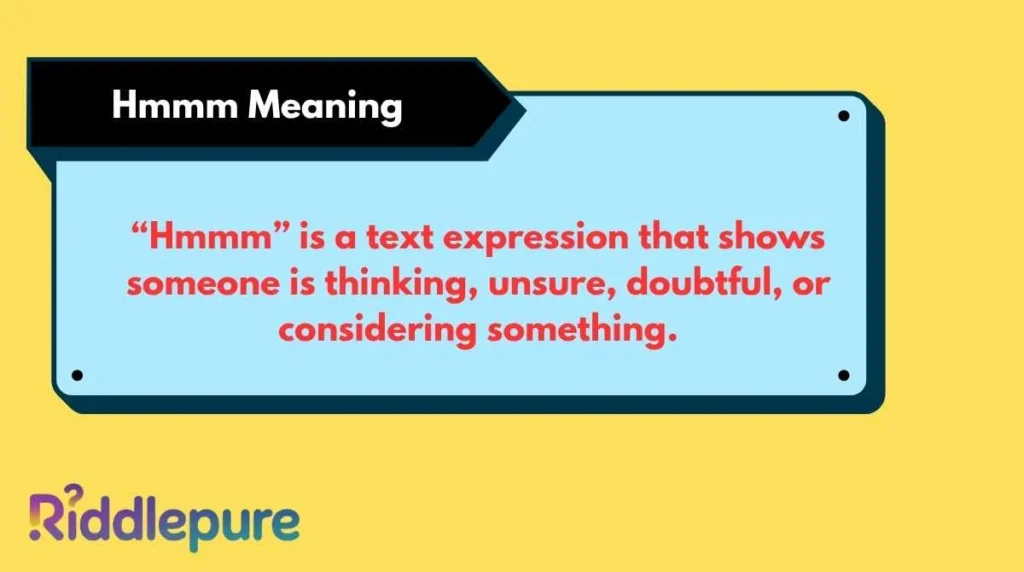
“Hmmm” is a text expression that shows someone is thinking, unsure, doubtful, or considering something.
It can also signal curiosity, mild disagreement, suspicion, or emotional hesitation depending on context. In some cases, it simply means the person is pausing before giving a full response.
Detailed Meaning Breakdown
Primary Meaning
The main meaning of “hmmm” is thinking or processing information.
It shows the sender is mentally reacting to what you said. They may need more time to decide or respond.
For example:
“Should we travel next month?”
“Hmmm…”
This suggests the person is considering the idea.
Secondary Meanings
“Hmmm” can also mean:
- Doubt or skepticism
- Mild disagreement
- Curiosity or interest
- Emotional hesitation
- Suspicion about truth
- Playful teasing
- Passive response when unsure what to say
Rare Meanings
In some cases, “hmmm” may mean:
- Silent judgment
- Disappointment
- Flirting tone
- Avoiding direct answer
- Testing reaction
Tone and relationship matter a lot.
What “Hmmm” Means in Different Situations
Everyday Texting
In normal chats with friends or family, “hmmm” usually means thinking or reacting quietly.
It is casual and often harmless.
Example:
“I bought a new phone.”
“Hmmm nice, which one?”
Here it shows interest.
Social Media Platforms
On platforms like comments or DMs, “hmmm” can mean curiosity or subtle doubt.
Sometimes it is used to question a post without being rude.
Example:
“Hmmm not sure I agree.”
It softens disagreement.
Dating & Relationships
In romantic chats, “hmmm” becomes more emotional.
It may show:
- Flirting
- Testing interest
- Jealousy
- Overthinking
- Desire for more details
Example:
“You were out late yesterday.”
“Hmmm with who?”
Tone here can signal concern or playful suspicion.
Professional Communication
In work chats, using “hmmm” is risky.
It may appear:
- Unprofessional
- Passive
- Indirect
- Confusing
Better to use clear responses like:
“I need time to review.”
Cultural or Regional Differences
In some cultures, indirect responses are polite.
So “hmmm” can mean respectful thinking.
In direct cultures, it may feel rude or unclear.
Psychological & Tone Analysis
Why People Use It
People type “hmmm” because:
- They need time to think
- They want to avoid quick reaction
- They feel unsure
- They want to sound thoughtful
- They want to show subtle emotion
It acts like a digital pause.
Social Signals
“Hmmm” can signal:
- Intelligence (thinking deeply)
- Doubt (questioning truth)
- Mystery (not revealing thoughts)
- Emotional distance
- Playfulness
Emotional Layer
Depending on tone, it can carry:
- Curiosity
- Suspicion
- Attraction
- Annoyance
- Confusion
Length also matters.
- “Hmm” = quick thought
- “Hmmm” = deeper thinking
- “Hmmmmmm” = dramatic reaction
15 Real Conversation Examples (Explained)
“Let’s start gym tomorrow.”
“Hmmm okay.”
Explanation: Mild hesitation but agreement.
“I met your friend today.”
“Hmmm really?”
Explanation: Surprise mixed with doubt.
“I think I will quit my job.”
“Hmmm why?”
Explanation: Concern and curiosity.
“You didn’t reply last night.”
“Hmmm was busy.”
Explanation: Defensive tone.
“Do you like this dress?”
“Hmmm it’s different.”
Explanation: Polite but unsure opinion.
“I love you.”
“Hmmm…”
Explanation: Emotional processing or uncertainty.
“I scored highest in class.”
“Hmmm impressive.”
Explanation: Thinking before praising.
“Let’s travel together.”
“Hmmm sounds fun.”
Explanation: Considering idea positively.
“She called you?”
“Hmmm yes.”
Explanation: Slight nervous tone.
“This movie was boring.”
“Hmmm I liked it.”
Explanation: Soft disagreement.
“I will call you later.”
“Hmmm okay.”
Explanation: Neutral response.
“I saw your post.”
“Hmmm which one?”
Explanation: Curious reaction.
“You forgot my birthday.”
“Hmmm sorry.”
Explanation: Realization moment.
“Want to try new food?”
“Hmmm maybe.”
Explanation: Indecision.
“I am moving abroad.”
“Hmmm that’s big.”
Explanation: Processing serious news.
When “Hmmm” Can Be Misunderstood
Context Confusion
Without voice tone, “hmmm” may feel:
- Rude
- Cold
- Judgmental
- Sarcastic
But the sender may only be thinking.
Generational Gap
Younger people use it casually.
Older users may see it as:
- Disrespect
- Lack of clarity
- Poor communication
Platform Differences
On fast chat apps, short replies are normal.
In emails, they feel strange.
Similar Words, Symbols, or Abbreviations
- Hmm – Quick thinking reaction
- Umm – Hesitation while speaking
- Oh – Realization or surprise
- Hmm ok – Thinking but agreeing
- Idk – I don’t know
- Maybe – Uncertain decision
- Right… – Doubtful agreement
- Interesting – Neutral reaction
- Wait – Pause before response
- 🤔 emoji – Visual thinking signal
When Not to Use “Hmmm”
Professional Risks
Avoid using it in:
- Job emails
- Client chats
- Formal discussions
- Academic messages
It looks unclear and informal.
Cultural Risks
Some cultures expect direct answers.
“Hmmm” may appear:
- Avoidant
- Passive
- Confusing
Tone Risks
If used too often, it can seem:
- Annoying
- Sarcastic
- Emotionally distant
Expert Tips for Using “Hmmm” Correctly
- Use it when you truly need thinking time
- Add more words for clarity
- Avoid using it alone in serious topics
- Match tone with relationship
- Do not overuse in long conversations
- Combine with emojis to show mood
- Follow up quickly with real response
- Use shorter or longer versions carefully
Frequently Asked Questions
What does “hmmm” mean in texting?
It usually means the person is thinking, unsure, or reacting quietly.
Is “hmmm” rude?
Not always. It depends on tone and context.
What does “hmmm” mean from a girl or boy?
It can mean curiosity, hesitation, or emotional reaction.
Does “hmmm” mean disagreement?
Sometimes. It can signal polite doubt.
Why do people send only “hmmm”?
They may be thinking or unsure how to respond.
Is “hmmm” flirting?
In romantic chats, yes — it can sound playful or teasing.
What is the difference between “hmm” and “hmmm”?
More “m” letters usually mean deeper thinking or stronger emotion.
Should I reply to “hmmm”?
Yes. Ask for clarification or continue conversation.
Final Summary & Smart Usage Advice
“Hmmm” is a simple but powerful text expression. It mainly shows thinking, hesitation, curiosity, or mild doubt. Its real meaning changes based on tone, relationship, culture, and situation.
In casual chats, it helps create natural conversation pauses. In emotional or romantic talks, it can carry deeper feelings. In professional communication, it is better to avoid it and use clear language instead.
The smartest way to use “hmmm” is to treat it as a temporary reaction — not a final message. Always follow it with clearer words.
Understanding small expressions like this improves digital communication skills. When you read tone better, you respond better. That builds stronger relationships online and offline.