Last updated on June 1st, 2026 at 07:54 am
You open a chat message and see just three letters: “asl?”
No greeting. No emoji. No full sentence. Just that.
Many people feel confused at this moment. Is it rude? Is it slang? Is someone asking a serious question or just starting small talk?
Short texting codes like this are common in modern online conversations. They save time but often create misunderstandings. A simple three-letter message can mean different things depending on the situation, platform, or even the person’s age.
This complete guide will remove all confusion. You will learn the real meaning of asl, how people use it in texting, social media, dating chats, and professional spaces. You will also see real examples, tone analysis, mistakes to avoid, and expert tips.
By the end, you will feel confident reading and using asl in everyday digital communication.
Quick Definition of “asl”
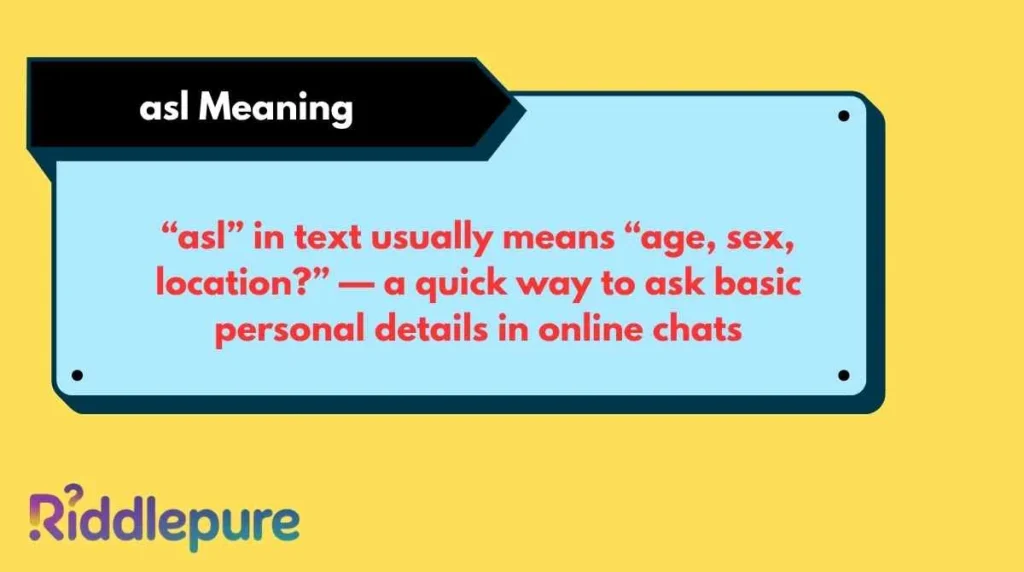
“asl” in text usually means “age, sex, location?” — a quick way to ask basic personal details in online chats.
It can also mean “as hell” in casual slang (for example: “tired asl”). In rare cases, it may refer to American Sign Language, depending on the context.
Detailed Meaning Breakdown
Primary Meaning: Age, Sex, Location
The most common meaning of asl comes from early internet chat rooms. People used it to quickly know who they were talking to.
It is usually written as:
- asl?
- asl pls
- 21/f/ny (a reply format)
This meaning still exists today, especially in gaming chats, anonymous apps, and random messaging platforms.
Secondary Meaning: “As Hell”
Modern texting has changed slang usage. Now many younger users use asl to mean “as hell.”
Examples:
- “I’m hungry asl.”
- “This movie is boring asl.”
Here, asl works like an intensifier. It adds strong emotion.
Rare Meaning: American Sign Language
Sometimes asl refers to American Sign Language, especially in educational or accessibility discussions.
Example:
- “Do you know asl?”
- “She is learning asl.”
Context decides the meaning.
What “asl” Means in Different Situations
Everyday Texting
In normal texting between friends, asl often means “as hell.”
Example:
- “Cold asl today.”
It sounds casual, expressive, and slightly informal.
Friends use it for humor or exaggeration.
Social Media Platforms
On platforms like short-video apps, comment sections, or meme pages, asl mostly means “as hell.”
People write:
- “Funny asl”
- “Cute asl”
- “Late asl”
It helps users react quickly without typing long sentences.
However, on anonymous social apps or live chats, it can still mean age, sex, location.
Dating & Relationships
In dating chats, asl usually keeps its old meaning.
Someone may ask:
- “asl?”
This shows they want to know personal basics before continuing.
Some people see it as normal. Others feel it is too direct.
Tone matters here.
Professional Communication
In work messages, asl is rarely appropriate.
It may look unprofessional or confusing.
If someone uses it, they probably mean American Sign Language, not slang.
Example:
- “Meeting will include asl interpreter.”
Cultural or Regional Differences
In some regions, older users understand asl only as age, sex, location.
Younger users often think it means as hell.
This generational gap creates misunderstandings.
In multilingual areas, the meaning depends strongly on internet culture exposure.
Psychological & Tone Analysis
Why People Use It
People use asl for three main reasons:
- Speed
- Informality
- Social testing
Typing three letters is faster than writing full questions.
It also creates a relaxed tone.
Sometimes it tests how open or friendly the other person is.
What It Signals Socially
Using asl may signal:
- Casual personality
- Internet experience
- Desire for quick connection
- Lack of formality
In dating or anonymous chats, it may show curiosity or interest.
In meme culture, it shows emotional exaggeration.
Emotional Layer Behind It
Tone can vary:
- Friendly
- Playful
- Curious
- Direct
- Sometimes suspicious
If someone sends only “asl?”, it may feel cold or robotic.
Adding emojis or words makes it softer.
Example:
- “hey asl 😊”
15 Real Conversation Examples (Explained)
- Person A: “asl?”
Meaning: Asking age, sex, location quickly. - Person B: “19/m/karachi”
Meaning: Standard reply format. - Friend: “I’m tired asl today.”
Meaning: Extremely tired. - Comment: “This song good asl.”
Meaning: Very good. - Gaming Chat: “asl before team up?”
Meaning: Wants basic info before playing. - Dating App: “Hi 🙂 asl?”
Meaning: Friendly but direct introduction. - Text: “Hot asl outside.”
Meaning: Weather is extremely hot. - Reply: “You funny asl bro.”
Meaning: Strong compliment. - Message: “Do you know asl?”
Meaning: Referring to sign language. - Chat Room: “asl pls fast.”
Meaning: Wants quick identity details. - Story Reaction: “Cute asl 😂”
Meaning: Very cute. - Friend: “Late asl again.”
Meaning: Very late habit. - Random DM: “asl snap?”
Meaning: Wants info before moving platform. - Class Group: “Need asl translator.”
Meaning: Sign language context. - Meme Comment: “Relatable asl.”
Meaning: Extremely relatable.
When “asl” Can Be Misunderstood
Context Confusion
Someone may think you are asking personal details when you only mean “as hell.”
Example:
- “Hungry asl”
Older reader may reply with age/location info.
Generational Gap
- Older users → Old chat meaning
- Younger users → Emotional slang meaning
This gap creates awkward replies.
Platform Differences
- Dating apps → identity question
- Meme pages → exaggeration slang
- Educational spaces → sign language
Understanding platform culture is important.
Similar Words, Symbols, or Abbreviations
- wyd – what are you doing
- hmu – hit me up
- idk – I don’t know
- ikr – I know right
- fr – for real
- tbh – to be honest
- ngl – not gonna lie
- lmk – let me know
- imo – in my opinion
- af – as f*** (same emotion as “asl” slang)
These help express tone quickly in digital talk.
When Not to Use “asl”
Professional Risks
Using asl in work chats can look immature.
Example:
- Writing “busy asl” to your manager may seem disrespectful.
Use full sentences instead.
Cultural Risks
In conservative cultures, asking age/sex/location too early may feel uncomfortable.
Always build trust first.
Tone Risks
Using only abbreviations can make you seem:
- Lazy
- Rude
- Emotionless
Balance slang with real words.
Expert Tips for Using “asl” Correctly
- Understand the platform first. Dating chat and meme comments are different.
- Add context words. Example: “so tired asl after gym.”
- Avoid in formal settings. Write clearly at work.
- Use emojis to soften tone. Helps avoid sounding robotic.
- Do not ask personal asl too quickly. Build conversation first.
- Watch generational audience. Older users may misunderstand.
- Avoid overuse. Too much slang reduces clarity.
- Match the other person’s style. Communication works best when tone aligns.
Frequently Asked Questions
What does asl mean in texting?
It usually means “age, sex, location?” or “as hell” depending on context.
Is asl rude to send?
It can feel rude if sent alone without greeting. Adding friendly words helps.
What does tired asl mean?
It means extremely tired.
Is asl still used in 2026?
Yes. The meaning has evolved but usage continues in modern slang.
Does asl mean American Sign Language in chat?
Sometimes. Educational or accessibility discussions use this meaning.
Why do strangers ask asl online?
They want quick identity information before continuing conversation.
Is asl safe to answer?
Only share personal details if you trust the person and platform.
What is the difference between asl and af?
Both intensify emotion. af is stronger and more explicit.
Final Summary & Smart Usage Advice
The meaning of asl depends fully on context.
It can be:
- A quick identity question from early internet culture
- A modern slang intensifier meaning “as hell”
- A reference to sign language in formal situations
Smart communicators always read the situation before using slang.
Think about the platform, relationship, tone, and audience.
Using asl correctly can make your messages feel natural and expressive.
Using it wrongly can create confusion or discomfort.
The best strategy is simple:
Be clear. Be respectful. Match your communication style to the moment.
When you understand digital language deeply, you communicate with confidence anywhere online.