You open your phone and see a message that simply says “tss.”
No emoji. No punctuation. Just three letters.
Now you start wondering — is the person annoyed? Joking? Ignoring you?
Modern texting is full of short expressions like this. They save time but often create confusion. A small abbreviation can carry a big emotional meaning depending on context, tone, and relationship.
This is why understanding “tss meaning in text” has become important. Many people use it daily in chats, social media comments, memes, and even voice-note captions. Yet, its meaning is not always obvious — especially across age groups, cultures, and platforms.
This guide gives you complete clarity. You will learn the real meaning of “tss,” when people use it, what tone it signals, and how to respond confidently. By the end, you will never feel confused again when you see this short but powerful texting expression.
Quick Definition of “TSS”
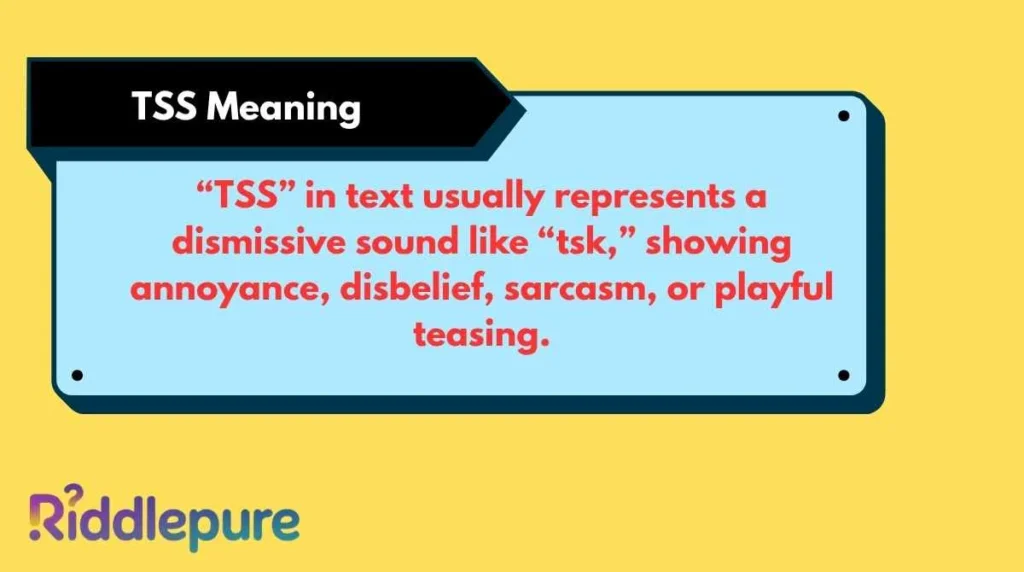
“TSS” in text usually represents a dismissive sound like “tsk,” showing annoyance, disbelief, sarcasm, or playful teasing.
It can also mean mild disagreement, mock disappointment, or joking judgment. In rare cases, it may appear as a sound effect in memes or represent an inside joke between friends.
Detailed Meaning Breakdown
Primary Meaning
The main meaning of “tss” is a textual version of the sound people make with their tongue or teeth to show irritation or disapproval.
In real life, someone might say “tsk-tsk.”
In text messages, this becomes “tss.”
It signals:
- Light frustration
- Judgment
- Mock seriousness
- Sarcasm
- Playful criticism
The tone is usually not aggressive, but it depends on the relationship and situation.
Secondary Meanings
In modern digital communication, “tss” can also mean:
- “You messed up.”
- “That was not smart.”
- “I expected better.”
- “Come on, really?”
- “I’m teasing you.”
It often appears in casual chats between friends.
Rare Meanings
Rarely, “TSS” may refer to:
- A sound effect in memes (like dramatic reaction sounds)
- An inside slang within gaming or group chats
- An abbreviation unrelated to texting tone (such as medical or technical contexts)
However, in everyday texting, tone-reaction meaning is dominant.
What “TSS” Means in Different Situations
Everyday Texting
In normal chats, “tss” is used to react quickly.
Example uses:
- When someone makes a silly mistake
- When teasing a friend
- When showing mock disappointment
It often replaces longer sentences like “That was not good.”
Social Media Platforms
On platforms like comment sections or meme replies, “tss” can mean:
- Sarcastic reaction
- Judgment of a bad opinion
- Dramatic or humorous response
It helps people react fast without writing paragraphs.
Dating & Relationships
In romantic chats, tone matters more.
“Tss” can signal:
- Playful jealousy
- Mock anger
- Flirty teasing
- Mild emotional reaction
But if overused, it may sound passive-aggressive.
Professional Communication
In workplace chats, “tss” is usually not appropriate.
It may look:
- Disrespectful
- Immature
- Confusing
- Emotionally unclear
Formal communication requires clearer language.
Cultural or Regional Differences
In some cultures, tongue-clicking sounds strongly signal disapproval or disrespect.
Therefore:
- Younger users may see it as funny
- Older users may see it as rude
- Some regions may interpret it as arrogance
Context always matters.
Psychological & Tone Analysis
Why People Use It
People use “tss” because it is:
- Fast
- Emotional
- Dramatic
- Playful
- Expressive
It allows reaction without long explanation.
What It Signals Socially
Using “tss” can show:
- Informal closeness
- Confidence in relationship
- Humor style
- Emotional reaction
- Social dominance or teasing
Emotional Layer Behind It
Depending on tone, “tss” may carry:
- Light disappointment
- Sarcasm
- Friendly mockery
- Irritation
- Flirty tension
Understanding the relationship context is key.
15 Real Conversation Examples (Explained)
- Friend: I forgot your birthday again.
You: Tss… unbelievable.
→ Shows mock disappointment. - Partner: I beat you in the game.
Reply: Tss, beginner’s luck.
→ Playful teasing. - Sibling: I ate your snacks.
Reply: Tss… I knew it.
→ Mild frustration. - Friend: I texted my ex.
Reply: Tss… bad idea.
→ Judgment reaction. - Colleague: I sent email to wrong boss.
Reply: Tss… that’s tough.
→ Sympathetic disappointment. - Friend: I tripped in public.
Reply: Tss 😂
→ Funny reaction. - Date: You forgot our plan.
Reply: Tss sorry.
→ Admitting mistake lightly. - Gamer: I lost again.
Reply: Tss practice more.
→ Competitive teasing. - Friend: I bought fake shoes.
Reply: Tss… you got scammed.
→ Disbelief. - Sibling: I broke your charger.
Reply: Tss you owe me one.
→ Mild blame. - Friend: I skipped gym.
Reply: Tss lazy.
→ Motivational teasing. - Partner: I finished series without you.
Reply: Tss betrayal.
→ Dramatic humor. - Friend: I lost wallet.
Reply: Tss hope you find it.
→ Concern mixed with disappointment. - Friend: I trusted him again.
Reply: Tss… why?
→ Emotional reaction. - Group Chat: Someone sends cringe meme.
Reply: Tss.
→ Silent judgment.
When “TSS” Can Be Misunderstood
Context Confusion
Without tone or emoji, it may feel:
- Harsh
- Dismissive
- Passive-aggressive
Generational Gap
- Younger users → Funny reaction
- Older users → Rude sound
Platform Differences
- Gaming chats → Normal
- Workplace apps → Risky
- Dating apps → Tone sensitive
Similar Words, Symbols, or Abbreviations
- Tsk — Classic disapproval sound
- Smh — Shaking my head in disappointment
- Bruh — Reaction to silly situation
- Lol — Laughing response
- Hmm — Thinking or doubt
- Ugh — Strong frustration
- Meh — Indifference
- Sigh — Emotional disappointment
- Facepalm — Reaction to stupidity
- Seriously? — Direct disbelief
When Not to Use “TSS”
Professional Risks
- Looks childish
- May seem disrespectful
- Creates misunderstanding
Cultural Risks
- Some cultures view tongue-click sounds as insult
- Can appear arrogant
Tone Risks
- May sound passive-aggressive
- Can damage emotional conversations
- May escalate conflict
Expert Tips for Using “TSS” Correctly
- Use it only in casual conversations
- Add emoji to soften tone
- Avoid in serious emotional talks
- Know the personality of the receiver
- Do not overuse — it loses effect
- Combine with words if message is sensitive
- Avoid in professional chats
- Use playfully, not aggressively
Frequently Asked Questions
What does TSS mean in texting?
It usually represents a tongue-click sound showing annoyance, sarcasm, or playful judgment.
Is TSS rude?
It depends on tone and relationship. With friends it can be funny. With strangers it may feel rude.
What is the difference between TSS and TSK?
Both show disapproval. “TSK” is more traditional. “TSS” is modern texting slang.
Can TSS be flirty?
Yes. In dating chats it can signal teasing, mock jealousy, or playful tension.
Do adults use TSS in messages?
Mostly younger users do. Adults may use it jokingly but less often.
Should I reply to TSS?
Yes. Respond based on context — joke back, explain, or clarify.
Is TSS common on social media?
Yes. It appears in memes, comment reactions, and group chats.
Can TSS mean something else?
Rarely. In non-text contexts it may stand for technical or medical terms.
Final Summary & Smart Usage Advice
Understanding “tss meaning in text” helps you navigate modern communication with confidence. This short expression is more than random letters — it is a tone signal. It can show sarcasm, playful disappointment, teasing, or mild judgment.
The key is context awareness.
Who sent it? What was discussed? What platform is used?
Use “tss” smartly:
- Great for humor and friendly teasing
- Risky in serious or formal situations
- Powerful when combined with emojis or words
Digital language keeps evolving. When you understand expressions like “tss,” you communicate more clearly and avoid unnecessary emotional confusion.