You’re chatting with a friend. Suddenly, they reply with “stsu.”
You pause. Is it an insult? A joke? A secret code? 🤔
Modern texting is full of short forms, slang, and abbreviations that change fast. What meant one thing last year can mean something different today. This creates confusion, awkward replies, and sometimes misunderstandings in conversations.
This complete guide explains exactly what “stsu” means in text, how people use it, and when you should (or should not) use it. You’ll learn real conversation examples, tone analysis, social meaning, and expert tips so you can communicate confidently in 2026 and beyond.
Quick Definition of “stsu”
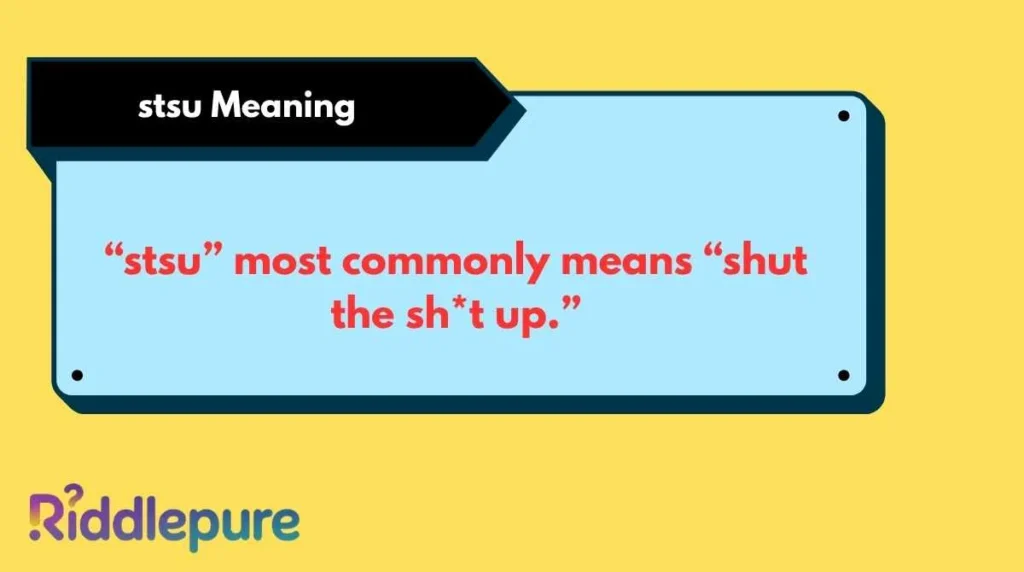
“stsu” most commonly means “shut the sh*t up.”
It is a strong slang abbreviation used in texting or online chats to tell someone to stop talking.
Secondary meanings can include playful teasing (“be quiet lol”), sarcastic disbelief, or intense reaction to shocking news. The exact meaning depends heavily on tone, relationship, and platform.
Detailed Meaning Breakdown
Primary Meaning
The main meaning of stsu is a rude or aggressive way to say “be quiet.”
People use it when they feel:
- Annoyed
- Overwhelmed
- Shocked
- Playfully dramatic
It is stronger than saying “shh” or “stop,” but shorter and more casual than typing a full insult.
Secondary Meanings
In some friendly conversations, stsu can be playful, such as:
- Expressing surprise
- Reacting to gossip
- Showing fake anger
- Joking between close friends
Example tone:
“You met your celebrity crush?? stsu 😂”
Here it means “No way, stop talking!” — not actual anger.
Rare Meanings
Rarely, stsu may be used as:
- A private inside joke abbreviation
- A gaming chat reaction
- A sarcastic response to bragging
Because it is not a formal or universal acronym, meaning may vary across groups.
What “stsu” Means in Different Situations
Everyday Texting
In daily chats, stsu usually signals irritation or playful disbelief.
- Friends may use it jokingly
- Siblings may use it during arguments
- Group chats may use it for dramatic reactions
Tone depends on emojis, punctuation, and relationship closeness.
Social Media Platforms
On platforms like messaging apps or comment sections:
- Used in reactions to shocking posts
- Used during online debates
- Used in memes and viral content
Sometimes it becomes part of internet humor culture 😄
Dating & Relationships
Meaning changes strongly in romantic contexts.
- Playful flirting: light teasing
- Emotional fights: rude dismissal
- Jealous reactions: defensive tone
In relationships, context is very sensitive, so misusing it can create tension.
Professional Communication
In work chats or formal messages, stsu is inappropriate.
It may appear:
- Disrespectful
- Immature
- Aggressive
- Unprofessional
Using it with colleagues or clients can damage your image.
Cultural or Regional Differences
Internet slang spreads globally 🌍
However:
- Some cultures view strong language as highly offensive
- Younger users may find it normal
- Older users may misunderstand it completely
Meaning and acceptance vary widely.
Psychological & Tone Analysis
Why People Use It
People use stsu because it is:
- Fast to type
- Emotionally expressive
- Dramatic and humorous
- Socially trendy
It helps release frustration quickly.
What It Signals Socially
Using stsu may signal:
- Informal communication style
- Strong personality
- Close friendship comfort
- Online slang awareness
But it can also signal:
- Low patience
- Aggression
- Lack of professionalism
Emotional Layer Behind It
Emotion behind stsu can include:
- Shock
- Anger
- Excitement
- Jealousy
- Sarcasm
Understanding emotion is key to interpreting meaning correctly.
15 Real Conversation Examples (Explained)
- A: “I just won a free trip!”
B: “stsu 😱”
→ Meaning: Shock and disbelief. - A: “You always complain.”
B: “stsu.”
→ Meaning: Annoyance. - A: “Guess who texted me?”
B: “stsu tell me now.”
→ Meaning: Excited teasing. - A: “Your team lost again.”
B: “stsu bro.”
→ Meaning: Defensive joking. - A: “I ate your snacks.”
B: “stsu 😡”
→ Meaning: Playful anger. - A: “I got promoted.”
B: “stsu no way!”
→ Meaning: Happy surprise. - A: “You talk too much.”
B: “stsu.”
→ Meaning: Argument escalation. - A: “She likes you.”
B: “stsu stop.”
→ Meaning: Embarrassed reaction. - A: “You owe me money.”
B: “stsu I know.”
→ Meaning: Avoiding topic jokingly. - A: “New phone looks cheap.”
B: “stsu jealous much?”
→ Meaning: Defensive sarcasm. - A: “We’re having surprise tests.”
B: “stsu 😭”
→ Meaning: Stress reaction. - A: “I beat your high score.”
B: “stsu hacker.”
→ Meaning: Friendly rivalry. - A: “Your crush waved at you.”
B: “stsu don’t lie.”
→ Meaning: Nervous disbelief. - A: “Let’s wake up at 5am.”
B: “stsu never.”
→ Meaning: Strong refusal humor. - A: “I told your secret.”
B: “stsu seriously??”
→ Meaning: Angry shock.
When “stsu” Can Be Misunderstood
Context Confusion
Without tone indicators:
- Could sound aggressive
- Could seem joking
- Could be misread as disrespect
Text lacks facial expressions or voice.
Generational Gap
- Teens may use it casually
- Adults may find it offensive
- Seniors may not understand it
This creates communication barriers.
Platform Differences
- Gaming chats → normal
- Workplace chats → risky
- Public comments → controversial
Always consider audience.
Similar Words, Symbols, or Abbreviations
- STFU – Stronger and more common version
- Shh – Gentle request for silence
- IDC – I don’t care
- IKR – I know right
- OMG – Surprise reaction
- BRB – Be right back
- LOL – Laughing reaction
- SMH – Disapproval
- TBH – Honest opinion
- IDK – Uncertainty
These abbreviations help express emotion quickly.
When Not to Use “stsu”
Professional Risks
Avoid using it:
- With bosses
- With clients
- In formal emails
- During interviews
It may harm credibility.
Cultural Risks
Some communities strongly dislike profanity-based slang.
Using stsu may:
- Offend elders
- Damage reputation
- Create conflict
Tone Risks
Even with friends, misuse can:
- Hurt feelings
- Escalate arguments
- Create misunderstandings
Always consider mood and timing.
Expert Tips for Using “stsu” Correctly
- Use only with close friends
- Add emojis to soften tone 🙂
- Avoid during serious discussions
- Never use in professional settings
- Understand cultural sensitivity
- Read conversation mood first
- Use humor carefully
- When unsure, choose polite words
Smart communication builds stronger relationships.
Frequently Asked Questions
What does stsu stand for in texting?
It usually stands for “shut the sh*t up,” a slang way to tell someone to stop talking.
Is stsu rude or friendly?
It can be both. Tone depends on context, relationship, and emojis used.
Do people still use stsu in 2026?
Yes, but usage is limited to informal chats and younger online communities.
Is stsu stronger than STFU?
Meaning is similar. STFU is more widely recognized and often considered harsher.
Can I use stsu with my partner?
Only if your relationship allows playful teasing. Otherwise, it may cause conflict.
Is stsu popular worldwide?
Internet slang spreads globally, but acceptance differs by culture and age group.
Should teenagers use stsu?
They often do, but respectful communication is always safer.
What should I say instead of stsu?
Try softer phrases like “stop 😂,” “no way,” or “be quiet please.”
Final Summary & Smart Usage Advice
“stsu” is a strong informal texting abbreviation that mainly means telling someone to stop talking.
It can express shock, humor, irritation, or sarcasm depending on context.
Because tone in text is unclear, misuse can easily lead to misunderstandings. Smart communicators adjust their language based on audience, mood, and platform.
Use slang confidently — but wisely. 👍
Clear, respectful messages always build better connections than aggressive shortcuts.