Have you ever been scrolling through your text messages or social media feed, stumbled upon “SMH,” and paused, wondering what it actually meant? Maybe your friend replied, “SMH at your idea,” or a tweet said, “SMH, can’t believe this happened.”
You might have guessed it was some kind of reaction—but what kind? Confusion is natural, especially since abbreviations evolve quickly in digital communication.
By the end of this guide, you’ll understand exactly what SMH means, how it’s used across different contexts, and even when you should or shouldn’t use it. Think of this as your ultimate 2026 handbook for mastering SMH in texts, posts, chats, and professional messages.
Quick Definition of “SMH”
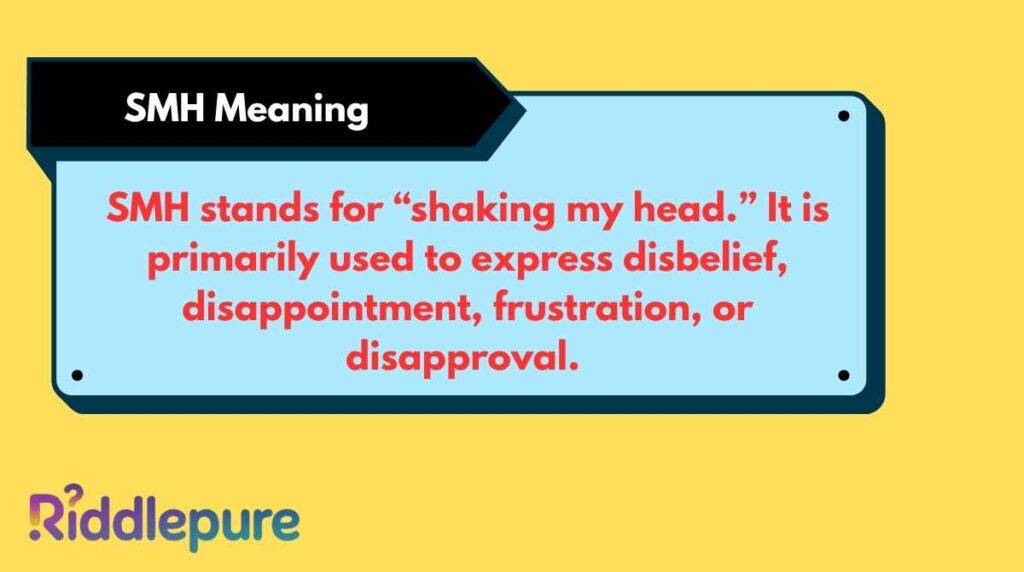
SMH stands for “shaking my head.” It is primarily used to express disbelief, disappointment, frustration, or disapproval. Secondary meanings, though less common, can include sarcasm or mild exasperation. Rarely, it may appear as a literal reference to physically shaking one’s head, but in texting and online communication, it almost always conveys a figurative emotional reaction.
Detailed Meaning Breakdown
Primary Meaning
The most common use of SMH is to show disapproval or disbelief without using words. For example, if someone shares a silly mistake, sending “SMH” signals your reaction: “I can’t believe this happened.” It’s succinct and universally understood among digital communicators.
Secondary Meanings
- Mild frustration or irritation: “SMH, why did this take so long?”
- Sarcastic disbelief: “SMH, that’s so typical.”
- Exasperation at someone’s repeated actions: “SMH, here we go again.”
Rare Meanings
While uncommon, SMH can occasionally appear in creative contexts like memes, captions, or GIF descriptions, implying humorous disbelief or exaggeration rather than genuine frustration.
What SMH Means in Different Situations
Everyday Texting
In casual texting, SMH expresses emotional reactions quickly. It saves typing a longer response like, “I can’t believe you did that” or “That’s so frustrating.” For instance, a friend sends a message about missing an important deadline: “SMH, really?”
Social Media Platforms
On platforms like Twitter, Instagram, or TikTok, SMH often accompanies viral content, memes, or shocking news. Its brevity works perfectly for limited-character posts, signaling engagement or reaction. Example: “SMH at how messy this trend is.”
Dating & Relationships
In dating apps or romantic conversations, SMH can show playful teasing or mild annoyance. Example: Your partner forgets your anniversary: “SMH, really?” Here, tone and context matter—sometimes it can be humorous rather than confrontational.
Professional Communication
Use SMH cautiously in work-related chats. It might convey frustration informally, but in formal emails or Slack messages, it can appear unprofessional. Example: “SMH, the report wasn’t submitted on time” may be better phrased as: “I noticed the report hasn’t been submitted yet.”
Cultural or Regional Differences
While widely understood in English-speaking countries, the tone and reception of SMH can vary. In some regions, younger generations use it liberally, while older audiences may not recognize it or could interpret it literally.
Psychological & Tone Analysis
Why do people use SMH?
- Efficiency: It conveys complex emotions in just three letters.
- Social Signaling: It communicates empathy, agreement, or shared disbelief with others.
- Emotional Layer: SMH can express a subtle mix of frustration, amusement, or disappointment without sounding harsh.
Socially, it signals that the sender is engaged but emotionally reserved—avoiding long explanations. Psychologically, it’s a shorthand for exasperation, keeping digital conversations quick and relatable.
15 Real Conversation Examples (Explained)
- Friend: “I forgot my keys at home again.”
You: “SMH.” → Disbelief at repeated mistakes. - Text: “They canceled the concert last minute.”
Reply: “SMH.” → Frustration at unexpected change. - Tweet: “People still double-dip at parties?”
Comment: “SMH” → Mild disgust or disbelief. - Dating app: “I watched your favorite movie already without you.”
Reply: “SMH” → Playful teasing. - Slack: “The client sent the wrong file again.”
Reply: “SMH” → Informal acknowledgment of repeated error. - Group chat: “He put pineapple on pizza.”
Reply: “SMH” → Personal disapproval. - TikTok comment: “This trend is ridiculous.”
Reply: “SMH” → Agreeing with viral criticism. - Text: “I accidentally texted my boss a meme.”
Reply: “SMH” → Sympathetic disbelief. - Instagram post: “Someone left a car in the middle of the street.”
Comment: “SMH” → Expressing social frustration. - Text: “I spent my entire paycheck on coffee.”
Reply: “SMH” → Playful exasperation. - Email chat: “The team missed the deadline.”
Reply: “SMH.” → Informal frustration. - Facebook comment: “My cat knocked over my laptop again.”
Reply: “SMH” → Humorously empathetic disbelief. - Snapchat: “I just walked into a glass door.”
Reply: “SMH” → Lighthearted judgment. - WhatsApp: “I lost my phone for the third time this month.”
Reply: “SMH” → Exasperation at repeated behavior. - Twitter: “New policy announcement is confusing.”
Reply: “SMH” → Expressing critical disbelief.
When SMH Can Be Misunderstood
- Context Confusion: Without tone or facial cues, SMH can seem judgmental rather than playful.
- Generational Gap: Older users may not recognize the abbreviation, causing miscommunication.
- Platform Differences: SMH on professional platforms can appear unprofessional, even if casual among friends.
Being mindful of context ensures your message is interpreted correctly.
Similar Words, Symbols, or Abbreviations
- LOL – Laugh out loud
- OMG – Oh my God
- FML – Frustrated or unlucky moment (stronger frustration than SMH)
- Facepalm – Physical gesture often typed as 🤦
- IDK – I don’t know
- TBH – To be honest
- SMFH – Stronger version: shaking my f***ing head
- ROFL – Rolling on the floor laughing
- LMAO – Laughing my a** off
- SMHGF – Rare: shaking my head, genuinely frustrated
When Not to Use SMH
- Professional Risks: Avoid in official emails or reports; it may seem lazy or disrespectful.
- Cultural Risks: Misinterpretation across languages or cultures can appear rude.
- Tone Risks: In sensitive conversations, SMH may feel judgmental or sarcastic instead of empathetic.
Expert Tips for Using SMH Correctly
- Consider your audience—use with peers, not superiors.
- Pair with context to avoid misunderstanding.
- Avoid excessive use; it can lose meaning.
- Use emojis to soften tone if playful: “SMH 😅.”
- Combine with words for clarity: “SMH, that’s unbelievable.”
- Recognize platform norms; Twitter, TikTok, and Snapchat welcome it more than LinkedIn.
- Be cautious in sensitive discussions—tone is easily misread.
- Update your usage as language evolves—SMH might shift in nuance over time.
Frequently Asked Questions
What does SMH mean in text messages?
It primarily means “shaking my head” and is used to express disbelief, frustration, or disapproval.
Can SMH be used in professional communication?
It’s generally informal. Use with caution in workplace chats and avoid in formal emails.
Is SMH negative or positive?
Mostly negative or neutral, signaling disapproval, disappointment, or mild frustration.
Does SMH have other meanings?
Yes, less commonly, it can be used sarcastically or literally as “shaking my head.”
How is SMH different from facepalm?
SMH is textual and versatile; facepalm often implies stronger judgment or embarrassment.
Is SMH understood globally?
It’s common in English-speaking countries, especially among younger generations.
Can SMH be funny?
Absolutely. It’s often used in humorous contexts, memes, or playful teasing.
What should I avoid when using SMH?
Avoid using it in sensitive, professional, or cross-cultural conversations where tone may be misinterpreted.
Final Summary & Smart Usage Advice
SMH is a concise, expressive tool that has become a staple in modern texting, social media, and casual communication. It signals disbelief, frustration, or mild exasperation efficiently, but like all language shortcuts, context is critical. Use it wisely with friends and peers, avoid overuse, and always be mindful of tone.
Mastering SMH allows you to communicate complex emotions quickly, humorously, and effectively. Next time you see something that leaves you speechless or annoyed, you’ll know exactly how to react—with a simple, confident SMH.