You’re scrolling through your messages or social media feed and suddenly see “NSFW.” Panic? Curiosity? Confusion? You’re not alone. Millions encounter this acronym daily, often unsure how to interpret it correctly. Some assume it’s harmless slang, others worry about professionalism or appropriateness.
Understanding NSFW is more than just decoding letters—it’s about reading tone, context, and platform culture. Misusing it can lead to awkward moments or unintended offense, while knowing its nuances signals social awareness and digital literacy.
This guide will break down everything you need to know about NSFW, from definitions and everyday uses to emotional undertones, misinterpretations, and smart communication strategies. By the end, you’ll confidently know when, where, and how to use it safely.
Quick Definition of “NSFW”
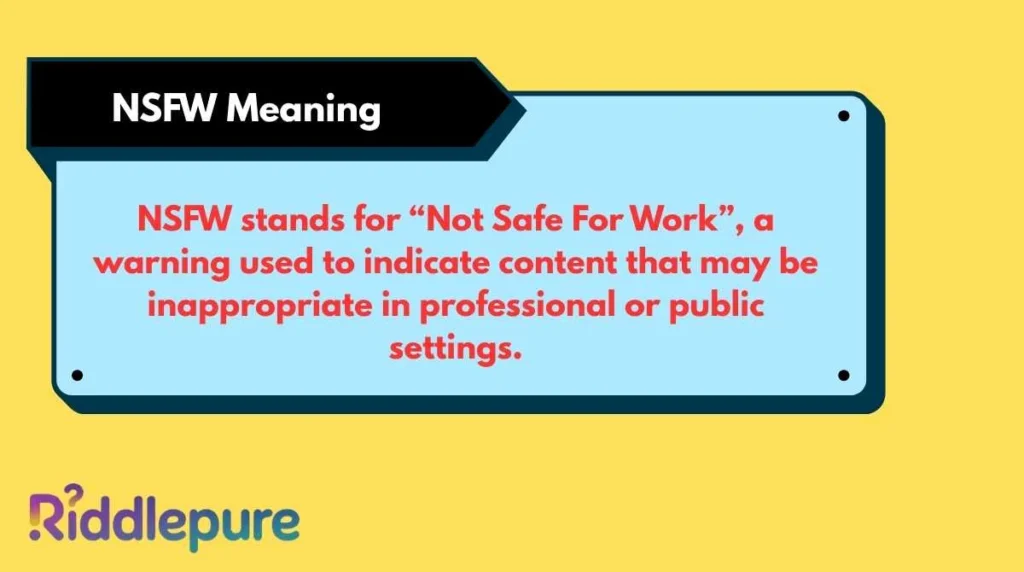
NSFW stands for “Not Safe For Work”, a warning used to indicate content that may be inappropriate in professional or public settings.
Secondary meanings sometimes include personal caution, such as “viewer discretion advised,” or informal shorthand for sensitive or explicit material in casual online conversations.
Detailed Meaning Breakdown
Primary Meaning:
At its core, NSFW signals that content—text, images, videos, or links—could be sexually explicit, violent, or otherwise inappropriate for workplace or public viewing. It serves as a protective label, letting people decide when and where to engage with content.
Secondary Meanings:
- Mildly shocking or offensive material: Some users apply NSFW to content that isn’t strictly adult but may surprise or offend.
- Humor and memes: Occasionally, NSFW warns of jokes or satire that are risqué, edgy, or politically incorrect.
Rare Uses:
- In gaming or hobby forums, NSFW might denote spoilers or controversial topics rather than sexual content.
- Occasionally, it’s used ironically, to exaggerate the “riskiness” of entirely safe content for comedic effect.
What “NSFW” Means in Different Situations
Everyday Texting
In personal messaging, NSFW warns friends before sending explicit memes, videos, or messages. Example: “Sending this clip, NSFW!” ensures the recipient can choose to view it privately.
Social Media Platforms
Platforms like Twitter, Reddit, or TikTok use NSFW as a content flag. It’s often mandatory for posts featuring nudity, sexual content, or graphic violence. Users see warnings or blurred previews to prevent accidental exposure.
Dating & Relationships
In dating apps, NSFW is frequently used to indicate flirtatious, suggestive, or adult material. Clear labeling can build trust, signaling honesty and consent about content.
Professional Communication
Using NSFW in professional channels (Slack, email, LinkedIn) is risky. If absolutely necessary, it’s typically in humor channels or among trusted colleagues, but even then, context is critical to avoid HR issues.
Cultural or Regional Differences
While NSFW is widely understood in English-speaking countries, other cultures may have different thresholds for what is “not safe” or inappropriate. Contextual sensitivity is crucial when communicating across regions.
Psychological & Tone Analysis
Why People Use It:
NSFW is primarily a courtesy signal. It shows awareness of social norms, respect for boundaries, and consideration for the recipient’s environment.
Social Signals:
- Shows awareness of social norms.
- Conveys trustworthiness and respect in casual or professional spaces.
- Sometimes signals rebellion or humor, depending on tone and platform.
Emotional Layer:
NSFW communicates caution, excitement, or teasing. It prepares the audience emotionally, balancing curiosity with potential discomfort.
15 Real Conversation Examples (Explained)
- Friend Chat:
“Check this meme, NSFW.”
Explanation: Warns the friend that the meme contains explicit humor. - Twitter Post:
“NSFW: Graphic art piece”
Explanation: Alerts followers that content is mature or disturbing. - Reddit Thread:
“NSFW: Discussion about violent scenes in movies”
Explanation: Flags content for sensitive viewers. - Work Slack Channel:
“NSFW joke—only for humor channel”
Explanation: Restricts potentially inappropriate humor to a safe, designated space. - Dating App Message:
“NSFW pic coming your way 😏”
Explanation: Prepares the recipient for adult content while maintaining consent. - Text to Roommate:
“NSFW, don’t open on family tablet”
Explanation: Prevents accidental exposure to inappropriate material. - Instagram Story:
“NSFW: edgy meme compilation”
Explanation: Signals followers to view cautiously or privately. - YouTube Description:
“NSFW: Contains strong language”
Explanation: Warns viewers of offensive or mature language. - Group Chat:
“NSFW, but you’ll laugh 😂”
Explanation: Prepares for humor that may be risqué. - Discord Server Post:
“NSFW voice chat tonight”
Explanation: Indicates the content or conversation is adult-oriented. - Email Forward:
“NSFW, adult material”
Explanation: Alerts recipient to avoid opening in professional environments. - Blog Comment:
“NSFW reference in article”
Explanation: Marks a specific part of content as inappropriate for work. - Snapchat Message:
“NSFW story incoming”
Explanation: Warns friends before they view sensitive content. - Gaming Forum:
“NSFW mod pack”
Explanation: Indicates the mod includes adult or graphic content. - TikTok Caption:
“NSFW prank video”
Explanation: Signals that the video contains explicit jokes or shocking moments.
When “NSFW” Can Be Misunderstood
Context Confusion:
Some people interpret NSFW as only sexual, ignoring violence, offensive language, or shocking visuals.
Generational Gap:
Younger users may see NSFW as casual humor; older audiences may view it as inappropriate or unprofessional.
Platform Differences:
Social media may enforce stricter rules; texting or private chats rely entirely on user discretion. Misunderstanding can happen if the audience isn’t familiar with digital etiquette.
Similar Words, Symbols, or Abbreviations
- SFW: Safe for work content.
- NSFL: Not safe for life—extremely graphic or disturbing.
- CW: Content warning—alerts to sensitive topics.
- 18+: Age restriction, usually adult content.
- Trigger warning (TW): Prepares for emotional distress triggers.
- Explicit: Contains adult language or material.
- Mature: Indicates content for adults only.
- PG-13 / R: Film ratings indicating age-appropriate content.
- Blurred preview: Visual content is hidden until clicked.
- Sensitive: Social media flag for offensive or mature material.
When Not to Use “NSFW”
Professional Risks:
- Sending NSFW content in official emails or open Slack channels can lead to HR action.
Cultural Risks:
- Some regions consider any adult or graphic content unacceptable, even with warnings.
Tone Risks:
- Casual use in mixed audiences may be interpreted as disrespectful or reckless.
Expert Tips for Using “NSFW” Correctly
- Always assess the audience before tagging content as NSFW.
- Use platform tools like content warnings or private chats.
- Label clearly at the start of a message or post.
- Avoid NSFW in professional emails or public forums.
- Respect regional and cultural norms—what’s safe in one place may be offensive in another.
- Combine with SFW alternatives when appropriate.
- Use sparingly to maintain its credibility and warning power.
- Be aware of tone—NSFW can signal humor, caution, or flirtation.
Frequently Asked Questions
What does NSFW mean in texting?
NSFW means Not Safe For Work, warning that the content is inappropriate for public or professional viewing.
Is NSFW only sexual content?
No, it can include violence, offensive language, or shocking images.
Can NSFW be used in emails?
It’s risky—only appropriate in trusted, casual professional spaces, never in official communications.
How do social media platforms handle NSFW content?
Platforms like Reddit, Twitter, and TikTok often blur or restrict access until a user confirms they want to view it.
What is the difference between NSFW and NSFL?
NSFW is not safe for work, typically adult or offensive content. NSFL is not safe for life, extremely disturbing or graphic content.
Can I use NSFW in dating apps?
Yes, it signals adult or suggestive material but should always respect consent.
Are there regional differences in NSFW interpretation?
Yes, cultural norms affect what is considered unsafe or inappropriate.
What are common mistakes with NSFW?
Overusing it, mislabeling content, or using it in professional/public spaces without caution.
Final Summary & Smart Usage Advice
NSFW is more than an acronym—it’s a social signal, a courtesy, and a guide for responsible digital communication. Understanding its meaning, contexts, and emotional cues can prevent awkward situations and build digital literacy.
Use NSFW confidently, responsibly, and thoughtfully. Label content clearly, respect your audience, and combine awareness with humor when appropriate. By mastering NSFW, you’ll navigate digital spaces safely while maintaining social respect and professional boundaries.