Last updated on December 22nd, 2025 at 10:16 am
Step back in time, dear traveler, where castles rose high, knights sharpened their steel, and minstrels carried laughter like torches through the dark. Medieval riddles weren’t just clever wordplay—they were entertainment, tests of wit, and lessons wrapped in mystery.
Around flickering firelight, peasants and lords alike pondered poetic puzzles, each answer holding both wisdom and a smile.
In this article, you’ll discover 115 + 70 medieval riddles, jokes, and puns—a treasury of humor that echoes across centuries. Whether you’re a history buff, a lover of wordplay, or simply someone who wants to sprinkle medieval flair into modern life, you’re in for a feast.
Expect riddles that tease the mind, puns that poke fun at knights and dragons, and jokes that would’ve made even a grumpy monk chuckle.
Sharpen your wits, don your metaphorical chainmail, and let’s journey through this medieval carnival of laughter, mystery, and rhyme. By the end, you’ll not only be entertained but ready to challenge friends at the round table of riddles.
💡 Did You Know?
- Medieval riddles were often used in monasteries to teach language, logic, and moral lessons.
- The famous Exeter Book (10th century) contains some of the oldest surviving riddles in the English language.
🎯 Riddle/Joke/Pun of the Day
“I guard a treasure but carry none,
I speak with silence yet frighten some.
In castles tall I stand so high,
Without me open, you’ll not pass by.
What am I?”
👉 Drop your guesses in the comments below!
Knightly Riddles to Test Thy Valor ⚔️
- What knight never rides but always stands?
Answer: A chess knight. - Why did the knight always carry a pencil?
Answer: Because he wanted to draw his sword. - I wear armor but never fight, I protect your body every night. What am I?
Answer: A blanket. - Why did the knight sleep with his armor on?
Answer: Because he wanted to have knightmares. - Which knight is most polite?
Answer: Sir, always. - What’s a knight’s favorite fish?
Answer: Swordfish. - I’m sharp but not cruel, I’m taught in school, and wielded like steel. What am I?
Answer: A pen. - Why don’t knights ever get lost?
Answer: Because they always follow the code. - What knight is the most musical?
Answer: Sir-rena. - Why did the knight sit on a round table?
Answer: Because he didn’t like to be cornered. - I travel with armor, but I’m not a knight. I have wheels but never ride. What am I?
Answer: A wagon. - What did the nervous knight say before battle?
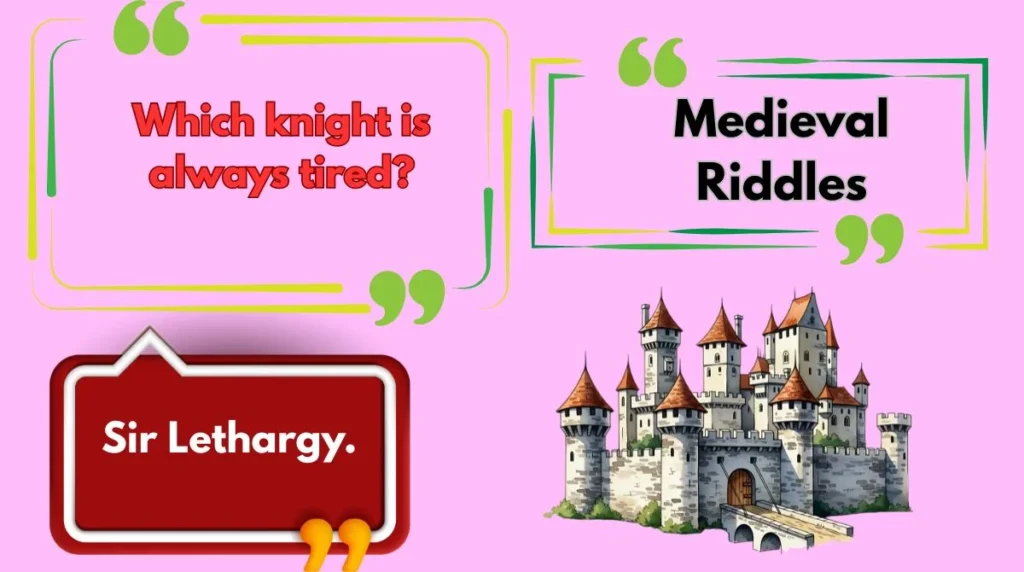
Answer: “I’m a little sword of worried.” - Which knight is always tired?
Answer: Sir Lethargy. - What’s a knight’s favorite dessert?
Answer: Swordcake. - I protect without moving, I stand without breath, I guard without eyes. What am I?
Answer: A shield.
Castle Conundrums and Courtyard Humor 🏰
- What has walls but no roof, guards but no teeth?
Answer: A castle. - Why was the castle always cold?
Answer: Because it was full of draughts. - What room can no one enter?
Answer: A mushroom. - Why did the jester sit on the castle walls?
Answer: To be on the jest-er side. - I have a moat but never float, what am I?
Answer: A castle. - Why don’t castles gossip?
Answer: Because walls have ears. - What’s a castle’s favorite drink?
Answer: Fortified wine. - Why did the guard always carry a broom?
Answer: To sweep the drawbridge. - What do you call a castle full of cats?
Answer: A meow-nastery. - Why did the knight bring a ladder?
Answer: To climb the ranks. - What kind of key opens a castle?
Answer: A mon-key. - Why was the castle cook always tired?
Answer: Because he had too many knight shifts. - What did one castle wall say to the other?
Answer: “Meet you at the corner.” - Why was the dungeon always popular?
Answer: Because it had great cell service. - What’s a castle’s favorite instrument?
Answer: A fort-epiano.
Dragon-Sized Riddles and Fiery Puns 🐉🔥
- I breathe without lungs, roar without throat, devour without teeth. What am I?
Answer: Fire. - Why don’t dragons ever need GPS?
Answer: They always follow their nose for treasure. - What’s a dragon’s favorite snack?
Answer: Knights in shining armor. - I guard gold but never spend it, I fly high but never rest. What am I?
Answer: A dragon. - Why was the dragon always happy?
Answer: Because he was on fire inside. - What do you call a dragon who tells jokes?
Answer: A pun-dragon. - Why don’t dragons play cards?
Answer: Because they’re afraid of being smoked out. - I burn all I touch but never feel. What am I?
Answer: Flame. - Why did the dragon join the band?
Answer: Because he loved heavy metal. - What’s a dragon’s least favorite subject?
Answer: History—it’s always behind them. - Why did the knight bring a shield?
Answer: To avoid becoming toast. - What do you call a dragon that loves tea?
Answer: A cham-dragon. - Why was the dragon a terrible gardener?
Answer: He kept burning the hedges. - What’s a dragon’s favorite weather?
Answer: Scorching sun. - I am the monster of old, feared and bold, yet in fairy tales my wings unfold. Who am I?
Answer: A dragon.
Monks, Minstrels & Merry Puns 🎶📜
- Why did the monk write riddles?
Answer: To keep his wit in cloister. - What’s a minstrel’s favorite instrument?
Answer: A lute for the loot. - Why did the bard tell jokes?
Answer: To earn a round of a-plaud-its. - I sing but have no voice, I rhyme without choice. What am I?
Answer: Poetry. - Why did the monk carry chalk?
Answer: To draw closer to God. - What do you call a silent bard?
Answer: A mime-strel. - Why was the minstrel broke?
Answer: Too many lute holes in his purse. - What’s a monk’s favorite math?
Answer: Pro-phet. - Why was the parchment always nervous?
Answer: Too many drafts. - What do you call a jester’s diary?
Answer: A jest-log. - I tell tales without a tongue, carry laughter yet weigh none. What am I?
Answer: A story. - Why was the monastery library always crowded?
Answer: Because knowledge was in monk demand. - What’s a minstrel’s favorite bread?
Answer: Loaf notes. - Why did the monk carry a bell?
Answer: To ring in new wisdom. - What did the lute say to the bard?
Answer: “You string me along.”
Market Mischief & Village Riddles 🛒🌾
- Why did the blacksmith tell jokes?
Answer: To forge laughter. - What do you call a baker’s riddle?
Answer: A bun-dle of fun. - I’m bought by the yard but worn by the inch. What am I?
Answer: Cloth. - Why did the farmer love riddles?
Answer: They kept his mind crop-ping up. - What do you call a dishonest merchant?
Answer: A weigh-lord. - Why was the butcher so witty?
Answer: He always had a sharp tongue. - I’m taken from a mine but never seen, locked in wood but not a tree. What am I?
Answer: Pencil lead. - Why was the juggler banned from the market?
Answer: He was tossing too many ideas around. - What do you call a shoemaker’s pun?
Answer: A sole joke. - Why did the merchant love riddles?
Answer: They were good for business talk. - What’s a farmer’s favorite riddle?
Answer: Corn-undrum. - Why did the tailor tell jokes?
Answer: To keep people in stitches. - I’m cracked but never broken, I’m eaten but never chewed. What am I?
Answer: An egg. - Why was the village bell important?
Answer: It was sound advice. - What do you call a miller’s riddle?
Answer: A grain of thought.
Fair Maidens, Kings & Courtly Quips 👑🌹
- Why did the queen tell riddles?
Answer: To keep her court entertained. - What’s a king’s favorite riddle?
Answer: A crown-undrum. - Why did the prince laugh?
Answer: He found it heir-larious. - I hold no jewels yet crown the head, what am I?
Answer: A crown of hair. - Why was the maiden always cheerful?
Answer: She had knight in shining humor. - What do you call a lazy king?
Answer: A ruler who doesn’t measure up. - Why was the princess clever?
Answer: She had royal wit. - What’s the king’s favorite fish?
Answer: King-fish. - Why was the court always noisy?
Answer: Too many royal pains. - What do you call a humble monarch?
Answer: A down-to-earth king. - I’m worn by the head, yet I’m not a hat. What am I?
Answer: A crown. - Why was the queen good at chess?
Answer: She could move everywhere. - What’s a jester’s favorite crown?
Answer: A fool’s cap. - Why did the king hire poets?
Answer: To keep things rhyme and proper. - What did the queen say to the joker?
Answer: “You jest enough.”
Dark Dungeons & Mysterious Riddles 🔒🕯️
- I’m filled but never full, I hold yet never touch. What am I?
Answer: A dungeon cell. - Why was the jailer always laughing?
Answer: He found humor arresting. - What do you call a prisoner who tells jokes?
Answer: A pun-dit. - I hold without hands, I lock without arms. What am I?
Answer: Chains. - Why did the skeleton avoid the dungeon?
Answer: He had no guts. - What’s a dungeon’s favorite song?
Answer: “Cell-ebrate good times.” - Why was the candle important?
Answer: It shed light on the dark. - What’s a thief’s favorite riddle?
Answer: A steal-thy one. - Why don’t prisoners tell lies?
Answer: Because the truth sets them free. - I’m dark as night, deep as sorrow, I hold but never borrow. What am I?
Answer: A dungeon. - Why was the key tired?
Answer: It was always turning. - What’s a dungeon’s least favorite meal?
Answer: Free-range chicken. - Why did the lock laugh?
Answer: Because it found the key pun-ny. - What’s a skeleton’s favorite room?
Answer: The living room. - Why did the guard read riddles?
Answer: To pass the time in cell-ebration.
FAQ Section
Q1: What is the oldest medieval riddle?
The oldest known English riddles come from the 10th-century Exeter Book.
Q2: Did medieval people really tell riddles for fun?
Yes! Riddles were popular entertainment, often shared in feasts, markets, and monasteries.
Q3: Why were riddles important in medieval times?
They taught logic, language, and even moral lessons, making them both fun and educational.
Q4: Are these riddles suitable for kids?
Absolutely—many medieval riddles are playful and family-friendly.
Q5: Can I use these riddles for events or games?
Yes! They’re perfect for parties, classrooms, or even medieval-themed weddings.
Conclusion
From knights and castles to dragons and jesters, riddles carried laughter and wisdom through the medieval ages. They weren’t just puzzles; they were sparks of joy in times of hardship, teaching wit and sharing smiles.
Whether you chuckled at a pun, puzzled over a riddle, or imagined the glow of torches in an ancient hall, you’ve now tasted a bit of history wrapped in humor.
So, dear reader, share these riddles with friends, drop your guesses in the comments, and let the spirit of medieval merriment live on in your words and laughter. 🏰✨