History is not just about dusty scrolls, forgotten battles, and statues with broken noses. Sometimes, it’s about a smile, a puzzle, and a clever twist of words. Historical riddles combine the wit of ancient times with the charm of storytelling, offering us a peek into how people once played with language and logic.
Imagine sitting in a medieval court, where a king tests his knights not with swords but with riddles. Or picture a group of Greek philosophers debating, not about politics, but about who can stump the others with the cleverest puzzle. Historical riddles aren’t just brain teasers—they’re windows into how humor, wordplay, and wisdom shaped cultures.
In this post, we’ll explore 95+ historical riddles, jokes, and puns that mix laughter with learning. From the halls of Rome to the castles of England, these riddles will entertain, enlighten, and maybe even inspire you to share a few at your next dinner party.
💡 Did You Know?
- The oldest known riddle comes from ancient Sumeria, written around 2350 BCE, asking: “There is a house. One enters it blind and comes out seeing. What is it?” (Answer: A school).
- In medieval England, riddles were not just games but a form of literature. The Exeter Book, dating back to the 10th century, contains nearly 100 riddles that still baffle and amuse readers today.
🎯 Riddle of the Day
“I speak without a mouth, yet have been heard across empires. I can record time without ticking, and tell stories without lips. What am I?”
👉 Drop your guesses in the comments below!
Ancient World Riddles 🌍
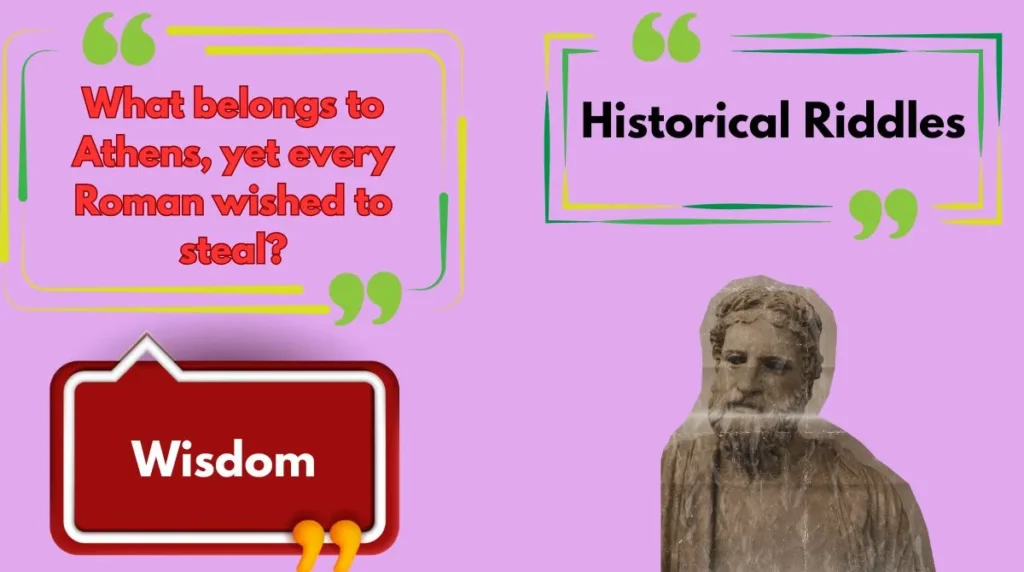
- What belongs to Athens, yet every Roman wished to steal?
Answer: Wisdom. - I was carried on slaves’ backs, I ruled without a sword. Who am I?
Answer: A Pharaoh’s throne. - What was filled with water yet never sank in Greece?
Answer: An amphora (clay jar). - I bring light without fire, and numbers without writing. Who am I in Egypt?
Answer: The Sun. - The Sphinx spoke of me, yet I am not alive. What walks on four, two, then three?
Answer: A human. - I am born from clay, worshipped in shrines, yet broken I am dust.
Answer: An idol. - I was struck in Rome, but never bled.
Answer: A coin. - I am a road that leads to Rome but never leaves it.
Answer: All roads. - What weapon conquered Alexander the Great but not his army?
Answer: Time. - The pyramids are my clothes, yet I am invisible.
Answer: The Pharaoh’s soul. - What Greek invention speaks louder today than ever before?
Answer: Democracy. - The Nile feeds me, but I never eat.
Answer: The land of Egypt. - I am cracked but not broken, I tell stories but cannot speak.
Answer: Ancient pottery.
Medieval Mysteries ⚔️
- What has a crown but never rules?
Answer: A castle tower. - I was forged in fire, carried in war, yet in peace I gather dust.
Answer: A sword. - What ring had no finger in medieval courts?
Answer: A bell. - Who worked all day but slept in straw, yet was richer than kings in laughter?
Answer: A jester. - What shines on a knight but never burns?
Answer: Armor. - What table had no food but plenty of legends?
Answer: The Round Table. - What flew without wings across Europe?
Answer: News and gossip. - Who wore iron yet feared water?
Answer: A knight in armor. - What had many windows but no glass?
Answer: A monastery. - Who always rang without speaking?
Answer: Church bells. - What knight could never fight?
Answer: Night. - Who had keys yet no locks?
Answer: A church organist. - What king was killed without bloodshed?
Answer: A chess king.
Renaissance Riddles 🎨
- I painted ceilings but never held a brush.
Answer: Michelangelo’s fame. - What invention let people see the stars closer than ever?
Answer: The telescope. - I was printed yet never spoke.
Answer: A book. - Who was crowned with flowers but ruled no land?
Answer: A poet. - I flew without wings, centuries before planes.
Answer: Da Vinci’s sketches. - What burns yet creates knowledge?
Answer: A candle in a study. - Who lives forever yet never breathes?
Answer: A portrait. - What door opened the modern age?
Answer: The printing press. - Who had patrons but no kingdom?
Answer: An artist. - What stretched across time with strings but no rope?
Answer: A lute. - I hold mirrors to the soul, yet I am not glass.
Answer: Art. - I am a bridge without bricks.
Answer: Knowledge. - What had golden ages without sunlight?
Answer: Literature.
Riddles of Royalty 👑
- Who wears jewels but feels no pride?
Answer: A crown. - What king ruled without lands?
Answer: A playing card king. - Who had power yet no throne?
Answer: A queen in chess. - What gift can make a king weep?
Answer: Time lost. - Who guarded the king but never moved?
Answer: A statue of a lion. - What court had no law?
Answer: A court of jesters. - Who sat on thrones yet owned no land?
Answer: Actors. - I am royal, yet I live in wax.
Answer: A seal. - Who had crowns but no heads?
Answer: Coins. - What queen stings but never rules?
Answer: A bee. - Who rules the deck but not the kingdom?
Answer: The king of hearts. - What prince is always green?
Answer: The Prince of Leaves (spring). - Who reigns but never rains?
Answer: A monarch in chess.
Ancient Wisdom Riddles 📜
- I am wiser than kings but written in silence.
Answer: A scroll. - What speaks when dead?
Answer: History. - Who teaches but never breathes?
Answer: A book. - I have roots but no soil, I grow but never bloom.
Answer: Knowledge. - Who is both heavy and light, depending on your mind?
Answer: Wisdom. - What weighs nothing yet is priceless?
Answer: Advice. - Who was killed yet became immortal?
Answer: Socrates’ ideas. - What philosopher never spoke?
Answer: A statue. - What library burned but still teaches?
Answer: The Library of Alexandria. - What never forgets yet never remembers?
Answer: Stone tablets. - I travel across centuries, yet never move.
Answer: A manuscript. - Who ruled minds but not armies?
Answer: Philosophers. - What ink survives longer than kings?
Answer: Knowledge.
War & Peace Riddles ⚔️🕊️
- What weapon wins without bloodshed?
Answer: Diplomacy. - What marches without feet?
Answer: An army. - Who wins but loses at the same time?
Answer: War. - What cries but has no tears?
Answer: A trumpet. - Who brings silence after chaos?
Answer: Peace. - What flies yet is heavier than men?
Answer: Arrows. - Who sleeps under banners?
Answer: Soldiers. - Who kills without hate?
Answer: Disease in war. - What field grows bodies, not crops?
Answer: A battlefield. - What fort is strongest without stone?
Answer: Loyalty. - Who carries kings but is never crowned?
Answer: A horse. - What dies first in war?
Answer: Truth. - Who ends war without a weapon?
Answer: Peace treaties.
Cultural Curiosities 🎭
- Who tells stories without a tongue?
Answer: Theater masks. - What dance lasted centuries?
Answer: The Dance of Death. - Who sang to kings yet owned nothing?
Answer: Minstrels. - What festival is old but always new?
Answer: Carnival. - What is shared by all cultures but never owned?
Answer: Music. - Who wrote history in colors?
Answer: Painters. - What monument speaks louder than books?
Answer: The Pyramids. - Who spoke in silence across cultures?
Answer: Symbols. - What wall divided yet united?
Answer: The Great Wall of China. - Who wore crowns of laurel, not gold?
Answer: Poets. - Who performed without a stage?
Answer: Street actors. - What painted stories before books existed?
Answer: Cave art. - Who laughs through tragedy?
Answer: The fool in plays.
Timeless Riddles ⏳
- What ages but never dies?
Answer: Time. - Who is always moving yet never leaves?
Answer: A clock. - What carries history but has no feet?
Answer: Rivers. - What speaks in silence across centuries?
Answer: Monuments. - Who grows old but grows stronger?
Answer: Legends. - Who records without ink?
Answer: Memory. - What is seen by all but owned by none?
Answer: The past. - Who repeats but never copies?
Answer: History. - What is made every second but never kept?
Answer: Time. - What destroys kings and peasants alike?
Answer: Death. - Who speaks when silence reigns?
Answer: Echoes. - What can’t be hoarded yet everyone spends?
Answer: Time. - Who wins every war?
Answer: Time.
FAQs About Historical Riddles
Q1: What is the oldest riddle in history?
The oldest recorded riddle comes from ancient Sumer, around 2350 BCE, about a house one enters blind and leaves seeing.
Q2: Why were riddles popular in medieval times?
Riddles entertained courts, educated children, and often carried moral or religious lessons.
Q3: Are riddles the same as proverbs?
Not exactly. Riddles are puzzles to solve, while proverbs are wise sayings.
Q4: Did famous figures like Shakespeare use riddles?
Yes! Shakespeare often used riddles and wordplay in his plays to entertain and challenge audiences.
Q5: Can riddles teach history?
Absolutely. Many riddles reflect the culture, values, and humor of their time, making them miniature lessons in history.
Q6: Are historical riddles still fun today?
Definitely! They’re timeless puzzles that still entertain, puzzle, and amuse modern readers.
Conclusion
Historical riddles are proof that laughter and curiosity have always been part of the human story. From ancient temples to medieval castles, people loved twisting words, crafting puzzles, and sparking smiles.
These 95+ riddles remind us that history isn’t just dates and battles—it’s wit, humor, and cleverness. Next time you’re at a party, try dropping one of these riddles—you might just stump even the smartest friend.
👉 Which riddle made you laugh or think the most? Share your answers in the comments and spread the fun!