In today’s digital age, acronyms and shorthand dominate how we communicate online. One abbreviation that often leaves people scratching their heads is GTFO.
Imagine scrolling through a group chat, and someone responds with “GTFO” after you share a funny story. Do they mean it literally? Are they joking? Or is it just another casual expression of disbelief?
The confusion around GTFO is common, especially as slang evolves faster than dictionaries can keep up. Some people interpret it as aggressive, while others see it as humorous. Whether you’re texting friends, posting on social media, or navigating professional online spaces, understanding GTFO’s nuances is essential.
This guide breaks down everything you need to know—its definitions, contexts, examples, and tips for smart usage in 2026. By the end, you’ll feel confident decoding this acronym whenever it pops up in your digital conversations.
Quick Definition of “GTFO”
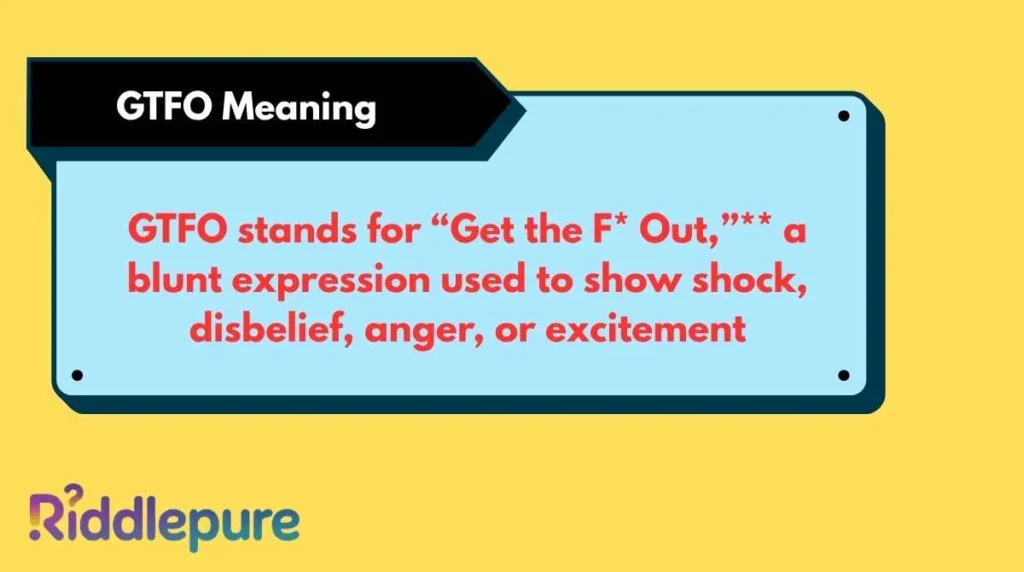
GTFO stands for “Get the F* Out,”** a blunt expression used to show shock, disbelief, anger, or excitement. While its primary meaning is dismissive or aggressive, GTFO can also be used humorously among friends. Rarely, it appears in memes or sarcastic replies as an exaggerated reaction, often without literal intent.
Detailed Meaning Breakdown
Primary Meaning:
The core meaning of GTFO is a direct command telling someone to leave or go away, often with strong emphasis. It is inherently informal and considered rude in most traditional contexts. Example: “GTFO, you’re kidding me!”
Secondary Meanings:
- Expression of Shock or Surprise: In casual conversations, GTFO often conveys disbelief rather than an actual order to leave.
- Example: “I just won free concert tickets!” – “GTFO! That’s amazing!”
- Humorous or Sarcastic Reaction: Among close friends, GTFO is frequently playful, exaggerating emotional reactions to surprising news.
Rare Meanings:
Occasionally, GTFO is adapted creatively in memes, texts, or gaming communities to emphasize absurdity or exaggeration, often stripped of its literal rudeness.
What “GTFO” Means in Different Situations
Everyday Texting
In personal texting, GTFO is most commonly a reaction to surprising or outrageous information. Its tone depends heavily on the relationship between the sender and receiver. Among friends, it’s playful; with strangers, it may be offensive.
Social Media Platforms
On platforms like Twitter, Instagram, or TikTok, GTFO is often used in comments or replies to express disbelief or hype. Memes frequently include GTFO in large, bold text to dramatize reactions.
Dating & Relationships
GTFO can serve as a humorous or dramatic response to an unexpected confession, joke, or anecdote. While it can indicate amusement, using GTFO incorrectly in dating contexts may come off as aggressive or dismissive.
Professional Communication
GTFO should almost never be used in professional or workplace messaging. Its vulgarity and informal nature make it inappropriate for emails, Slack channels, or LinkedIn interactions. Instead, alternatives like “I can’t believe it” or “That’s surprising” are safer.
Cultural or Regional Differences
Some regions are more tolerant of slang and casual acronyms, while others consider GTFO extremely offensive. Context and audience awareness are critical. For example, younger generations often use GTFO jokingly, whereas older generations might perceive it as hostile.
Psychological & Tone Analysis
Why People Use GTFO
GTFO is used to convey strong emotional reactions efficiently. It packages surprise, disbelief, amusement, or dismissal in just four letters, saving time and emphasizing intensity.
Social Signals
Using GTFO signals familiarity, casualness, or shared humor. Among close peers, it strengthens social bonds, but among less familiar contacts, it may signal rudeness or impatience.
Emotional Layer
GTFO carries a mix of emotions: excitement, shock, or irritation. Its meaning is highly context-dependent, requiring careful reading of tone, relationship, and situation to interpret correctly.
15 Real Conversation Examples (Explained)
- Friend: “I just got a free vacation to Bali!”
You: “GTFO!”
Explanation: Expresses excitement and disbelief, playful tone. - Colleague: “I accidentally deleted the report.”
You: “GTFO…”
Explanation: Shows mild shock, potentially frustrated but informal. - Partner: “I ate the last slice of pizza.”
You: “GTFO! That was mine!”
Explanation: Humorous and exaggerated reaction. - Sibling: “I finished your video game without telling you.”
You: “GTFO!”
Explanation: Shock and playful annoyance. - Texting Friend: “I met Beyoncé at the mall.”
You: “GTFO!!!”
Explanation: Extreme disbelief, excitement-focused reaction. - Group Chat: “I’m moving to another country tomorrow.”
You: “GTFO, seriously?”
Explanation: Mixture of shock and curiosity. - Social Media Reply: “I got a free iPhone.”
You: “GTFO 😂”
Explanation: Humor, disbelief, meme-style reaction. - Dating Chat: “I’ve been to all seven continents.”
You: “GTFO, that’s impressive!”
Explanation: Admiration and playful disbelief. - Sibling: “I accidentally broke your phone.”
You: “GTFO, no way!”
Explanation: Shock and mild frustration. - Online Forum: “Aliens exist, proof included.”
You: “GTFO, really?”
Explanation: Skeptical disbelief, informal tone. - Texting Friend: “I just adopted three puppies.”
You: “GTFO, I want pics!”
Explanation: Excitement and playful engagement. - Work Chat (not recommended): “I accidentally sent the wrong file to the client.”
You: “GTFO!”
Explanation: Shows urgency but may be inappropriate professionally. - TikTok Comment: “I tried this viral challenge and failed.”
You: “GTFO 😂”
Explanation: Humorous disbelief, typical social media reaction. - Gaming Chat: “I won the final round without losing any lives.”
You: “GTFO, no way!”
Explanation: Competitive excitement and shock, playful.
When “GTFO” Can Be Misunderstood
- Context Confusion: Without clear tone, GTFO can be interpreted as offensive rather than playful.
- Generational Gap: Older users might perceive it as aggressive, while younger users see humor.
- Platform Differences: Professional platforms or international audiences may misinterpret it as hostile language.
Similar Words, Symbols, or Abbreviations
- LOL – Laugh out loud; amusement.
- OMG – Oh my God; shock or excitement.
- WTF – What the f***; disbelief or confusion.
- LMAO – Laughing my ass off; humor.
- SMH – Shaking my head; disappointment or disbelief.
- FML – F*** my life; frustration.
- ROFL – Rolling on the floor laughing; extreme humor.
- IDK – I don’t know; uncertainty.
- BRB – Be right back; temporary absence.
- YOLO – You only live once; impulsive decision-making.
When Not to Use “GTFO”
- Professional Risks: Emails, work chat, and official communications; seen as vulgar and unprofessional.
- Cultural Risks: International audiences may interpret it as offensive.
- Tone Risks: Aggressive, hostile, or dismissive if used incorrectly; can damage relationships.
Expert Tips for Using “GTFO” Correctly
- Know your audience; restrict use to friends or casual online interactions.
- Avoid GTFO in professional or formal settings.
- Use punctuation or emojis to soften tone (e.g., GTFO 😂).
- Contextualize with conversation; pair with humor or disbelief.
- Observe generational or cultural sensitivity before sending.
- Use in moderation to maintain impact.
- Avoid using GTFO with strangers to prevent misinterpretation.
- Consider alternative reactions in professional or mixed settings.
Frequently Asked Questions
What does GTFO mean in texting?
GTFO in texting primarily means “Get the F* Out,”** used to express shock, disbelief, or humor.
Is GTFO offensive?
It can be offensive depending on context, tone, and audience. Among close friends, it is often playful.
Can I use GTFO professionally?
No, GTFO is vulgar and informal; using it professionally can harm your credibility.
What is the difference between GTFO and WTF?
GTFO is a command or reaction emphasizing surprise or disbelief, while WTF expresses confusion or disbelief.
Is GTFO used internationally?
Yes, but interpretations vary; some cultures may view it as extremely rude.
Can GTFO be used humorously?
Absolutely, in informal contexts with friends or on social media, GTFO is often playful.
Are there alternatives to GTFO?
Yes, expressions like “No way!”, “You’re kidding!”, or “I can’t believe it!” are safer in mixed settings.
Why is GTFO popular online?
Its brevity, emotional impact, and meme culture integration make it efficient and relatable in digital conversations.
Final Summary & Smart Usage Advice
GTFO is a versatile acronym that can convey disbelief, shock, humor, or dismissal. Understanding its primary and secondary meanings, audience, and context is crucial to avoid miscommunication. Use it responsibly with friends or informal online communities, and never in professional or sensitive situations.
By reading tone cues, adding emojis when playful, and observing context, you can confidently decode and employ GTFO in 2026 digital communication.
Mastering GTFO not only makes you fluent in modern texting culture but also helps navigate the fine line between humorous exaggeration and unintended offense. Use it smartly, and you’ll always communicate with impact and clarity.