Imagine receiving a text that says, “I really need this done today.” That tiny emphasis, often highlighted with italics, bold, or repeated letters, can completely change the tone of the message. Yet, many people wonder: does emphasizing text always make a message clearer, or can it cause confusion?
In the digital age, where communication happens faster than ever, understanding how to emphasize text is crucial. From casual chats to professional emails, the way we highlight certain words signals intent, urgency, and emotion. Misusing emphasis can lead to misunderstandings, while mastering it can make your messages precise, persuasive, and expressive.
This guide breaks down the meaning,b By the end, you’ll know exactly when and how to highlight words, phrases, or sentences effectively, ensuring your messages are read exactly as you intend.
Quick Definition of “Emphasize Text”
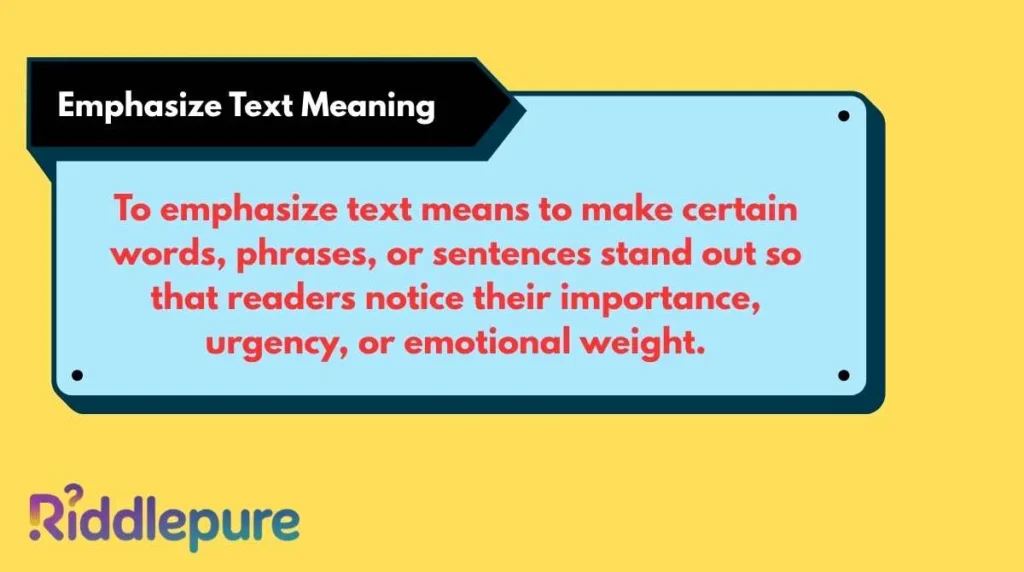
To emphasize text means to make certain words, phrases, or sentences stand out so that readers notice their importance, urgency, or emotional weight. It can be done through formatting (bold, italics, underline), punctuation, repetition, or styling in digital platforms.
Secondary meanings include highlighting a key idea for clarity, persuasion, or humor. Rarely, it may refer to emphasizing text visually in creative media like memes or advertisements.
Detailed Meaning Breakdown
Primary Meaning
At its core, emphasizing text is a way to direct attention. Think of it as pointing to a word in a sentence and saying, “This matters.” In digital communication, emphasis compensates for the lack of vocal tone, facial expressions, or body language.
- Example: “I really like your idea.” The italics on really signal strong emotion or approval.
Secondary Meanings
- Persuasive Emphasis: Highlighting text to convince the reader.
- Example: “This offer ends tomorrow!” The bold text creates urgency.
- Humorous or Sarcastic Emphasis: Using emphasis to signal irony or playful tone.
- Example: “Oh, great, another Monday…” Here, italics convey sarcasm.
Rare Meanings
In niche contexts, such as coding, design, or creative writing, emphasis may involve font changes, color, or animation to direct attention.
What “Emphasize Text” Means in Different Situations
Everyday Texting
People often emphasize text to show feelings, urgency, or humor. Common tools include capitalization, italics (via asterisks), emojis, and repetition.
- Example: “I’m SO excited!!! 😄”
- Interpretation: The capitalization and multiple exclamation marks show high excitement.
Social Media Platforms
Emphasis online can be subtle or flashy, depending on the platform:
- Twitter/X: Short, punchy emphasis works best due to character limits.
- Instagram: Bold or italic captions draw attention in crowded feeds.
- Facebook: Emphasis often highlights reactions or call-to-action phrases.
Dating & Relationships
Text emphasis can convey attraction, concern, or playfulness:
- Example: “I really miss you ❤️” – shows genuine emotion.
- Overusing bold or italics may come across as intense or desperate.
Professional Communication
In emails or work chats, emphasis helps clarify points without sounding aggressive:
- Bold key deadlines: “Submit your report by Friday 5 PM.”
- Italics can soften tone: “I appreciate your effort on this project.”
Cultural or Regional Differences
Emphasis can be interpreted differently depending on culture:
- Some cultures view capitalization as shouting.
- Emojis and formatting may be less common or even unprofessional in formal regions.
Psychological & Tone Analysis
Why People Use Emphasis
- Signal importance: Readers know what to focus on.
- Convey emotion: Italics, bold, or repeated letters express tone.
- Enhance persuasion: Bold or highlighted words can influence decisions.
What It Signals Socially
Emphasized text communicates personality traits: enthusiasm, urgency, humor, or care. It can also indicate dominance or emotional vulnerability depending on context.
Emotional Layer Behind Emphasis
Emphasis compensates for missing vocal cues. Without tone, digital text risks being flat or misinterpreted. Strategic emphasis recreates nuances like sarcasm, excitement, or concern.
15 Real Conversation Examples (Explained)
- “I really need your help.” – Italics show urgency and personal appeal.
- “That was amazing!” – Bold expresses strong admiration.
- “Nooo, don’t do that 😱” – Repetition and emoji highlight distress or panic.
- “Sure… if you insist.” – Italics signal sarcasm or passive resistance.
- “Submit the report by tomorrow!” – Bold emphasizes a deadline.
- “I can’t believe it’s already Monday.” – Bold emphasizes frustration or disbelief.
- “I’m so excited!!!” – Exclamation marks emphasize strong emotion.
- “You really shouldn’t have done that.” – Italics indicate gentle correction or caution.
- “LOL, that’s hilarious 😂” – Abbreviations and emoji enhance humor.
- “We need to focus on this part.” – Bold directs attention in a team discussion.
- “I think it’s okay.” – Italics convey uncertainty.
- “STOP! Read this first.” – Capital letters emphasize urgency or command.
- “Can we meet today or tomorrow?” – Bold clarifies options.
- “Wow… that’s impressive.” – Italics add subtle admiration.
- “No way!!! 😮” – Repetition and emoji signal surprise.
When “Emphasize Text” Can Be Misunderstood
Context Confusion
Without tone, emphasis can be misread as anger, sarcasm, or over-excitement.
- Example: “Fine.” vs. “Fine.” – the second may seem passive-aggressive.
Generational Gap
Younger users may interpret all caps or emoji exaggerations as humorous, while older generations may find them unprofessional or aggressive.
Platform Differences
Different apps handle formatting differently:
- WhatsApp supports italics and bold.
- Twitter/X may require all caps or emojis for emphasis.
- Emails require proper formatting, or emphasis may appear informal.
Similar Words, Symbols, or Abbreviations
- Bold – Makes text thicker to draw attention.
- Italics – Slants text to signal emphasis.
- Underline – Adds visual focus.
- ALL CAPS – Conveys shouting or extreme urgency.
- Repetition – Repeating letters or words to highlight emotion.
- Exclamation marks (!) – Emphasizes excitement or urgency.
- Asterisks (*) – Often used for italics online.
- Tilde (~) – Sometimes used for playful tone.
- Emoji – Adds emotional context.
- Bold + Color (HTML/Design) – Visual emphasis in digital content.
When Not to Use “Emphasize Text”
Professional Risks
- Overuse of all caps or emojis can appear unprofessional.
- Excessive bold or italics may distract from the message.
Cultural Risks
- Some cultures interpret capitalization or bold as aggressive.
- Emojis may not translate across regions.
Tone Risks
- Misplaced emphasis may imply sarcasm, frustration, or anger unintentionally.
- Overemphasis reduces impact when truly important points are made.
Expert Tips for Using “Emphasize Text” Correctly
- Use sparingly: Only emphasize key points for maximum impact.
- Match tone to context: Casual chats allow more creativity; professional emails require restraint.
- Combine with punctuation: Exclamation marks or ellipses complement emphasis.
- Consider audience: Age, culture, and platform affect interpretation.
- Avoid all caps for long text: It can seem aggressive.
- Use formatting tools: Bold, italics, and underline strategically.
- Test clarity: Read the text aloud or preview to ensure intended tone.
- Pair with emojis if appropriate: Adds emotional layer for casual conversations.
Frequently Asked Questions
What does it mean to emphasize text?
It means making certain words, phrases, or sentences stand out using formatting, punctuation, repetition, or styling.
Why do people emphasize text in messages?
To signal importance, emotion, urgency, humor, or sarcasm. Emphasis compensates for missing vocal tone in digital communication.
How can I emphasize text professionally?
Use bold or italics sparingly, focus on deadlines or key instructions, and avoid emojis or all caps in formal messages.
Is using all caps considered emphasis or shouting?
It depends on context. In casual chats, it signals strong emotion. In professional settings, it may appear aggressive.
Can emphasis be misunderstood?
Yes, tone and context matter. Misinterpretation can occur across generations, cultures, or platforms.
Are emojis a form of text emphasis?
Yes, emojis often emphasize tone, mood, or emotion in casual communication.
Should I emphasize text in emails?
Only for important points like deadlines, instructions, or key takeaways. Overuse may reduce professionalism.
What is the best way to emphasize text online?
Use a combination of bold, italics, selective capitalization, punctuation, and, where appropriate, emojis to convey tone clearly.
Final Summary & Smart Usage Advice
Emphasizing text is a powerful communication tool that shapes how readers perceive your message. Done right, it conveys emotion, urgency, or humor; done wrong, it can confuse or offend. The key is balance: choose your words carefully, use formatting strategically, and always consider your audience.
By mastering emphasis in texts, emails, and social media, you communicate with clarity and confidence. Whether you want to persuade, express, or entertain, proper emphasis ensures your message is noticed and understood exactly as you intend.